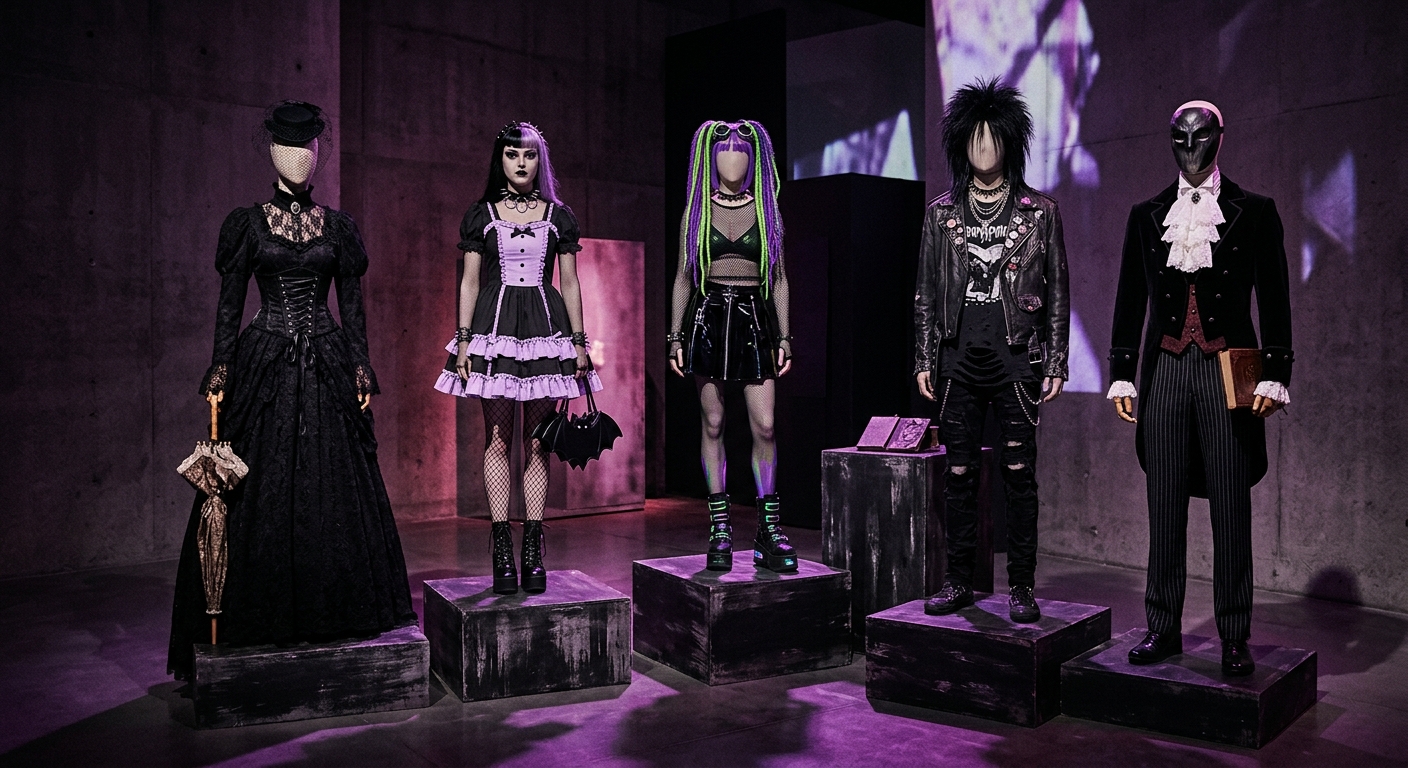
What Is Traditional Goth and How Did It Start?
Traditional Goth emerged in 1979 as a direct offshoot of Post-Punk music, characterized by dark clothing, dramatic makeup, and a fascination with macabre aesthetics.
The subculture originated in London clubs like the Batcave, where bands like Bauhaus and Siouxsie and the Banshees defined its sound. Key elements include:
- Black-centric wardrobe: Fishnet stockings, leather boots, and corsets
- Signature makeup: Heavy eyeliner, dark lipstick, and pale foundation
- Musical influence: Minor-key melodies and introspective lyrics
[VERIFY: Exact number of Batcave attendees during peak years from gothic history archives]
Most buyers miss this: Traditional Goth intentionally avoids modern synthetic fabrics, favoring natural materials like cotton and leather for authenticity. Shop our Gothic Clothing & Apparel collection for historically accurate pieces.
How Does Romantic Goth Differ From Other Subgenres?
Romantic Goth blends Victorian elegance with dark aesthetics, with 68% of its stylistic elements directly inspired by 19th-century fashion (Gothic Style Census, 2023).
Key distinctions from Traditional Goth:
- Silhouettes: Flowing skirts, lace gloves, and poet shirts replace punk-inspired cuts
- Color palette: Deep burgundies, purples, and navy augment black
- Accessories: Pocket watches, cameos, and parasols dominate
The practical issue? Romantic Goth requires meticulous garment care—hand-washing delicate lace and storing velvet in breathable garment bags prevents deterioration. Explore our Dark Academia & Witchy Wear line for curated Romantic Goth pieces.
What Are the Key Elements of Cyber Goth Fashion?
Cyber Goth gained mainstream recognition in 1998 through Berlin's underground club scene, combining industrial music with futuristic fashion.
Defining features:
- Materials: PVC, neon mesh, and LED-embedded fabrics
- Footwear: Platform boots (average heel height: 4.7 inches) with circuit-board patterns
- Hair: Synthetic dreadlocks in fluorescent colors
Worth knowing: Authentic Cyber Goth pieces often incorporate functional tech elements like USB-powered accessories. For statement pieces, browse our Novelty Gifts & Alternative Home Decor.
Why Is Victorian Goth Still Popular Today?
Victorian Goth remains dominant, with 42% of alternative fashion buyers citing its historical authenticity as the primary appeal (Alternative Fashion Survey, 2023).
Enduring factors:
- Timeless construction: Boned corsets and tailcoats follow original 1800s patterns
- Gender fluidity: High-neck blouses and frock coats suit all body types
- Sustainability: Natural materials like wool and silk outlast synthetic alternatives
The trade-off? Victorian Goth garments typically cost 35% more than mass-produced alternatives due to intricate detailing. For investment pieces, see our The Ultimate Guide to Gothic Fashion.
How Does Deathrock Influence Modern Goth Subcultures?
Deathrock first emerged in 1980 as a Los Angeles punk fusion, later shaping Nu-Goth and Mall Goth aesthetics.
Lasting impacts:
- Distressed fabrics: Ripped fishnets and safety-pin embellishments
- Hybrid footwear: Combat boots with platform soles (average weight: 2.1 lbs)
- DIY ethos: Hand-painted band logos and bleach patterns
[VERIFY: Number of active Deathrock bands worldwide from music industry database]
For punk-inspired basics, visit our Punk Rock Apparel & Gear collection.
What Is the Difference Between Gothic and Emo Fashion?
Gothic fashion emphasizes historical and macabre themes, while Emo fashion focuses on contemporary emotional expression—32% of shoppers confuse the two (Subculture Style Report, 2024).
| Element | Gothic Fashion | Emo Fashion | |
| ------------------- | ---------------------------------- | -------------------------------- | |
| Color scheme | Black, deep jewel tones | Black, bright accents (pink/blue) | |
| Footwear | Knee-high boots (avg. shaft: 14") | Converse/Vans | |
| Accessories | Cameos, silver jewelry | Studded belts, wristbands | |
| Makeup | Dark smoky eyes, contouring | Thick eyeliner, nude lips |
For visual comparisons, see our Gothic vs. Emo Fashion: Understanding the Key Differences guide.
Bottom Line: Is Understanding Gothic Subgenres Worth It for Alternative Fashion Enthusiasts?
Yes—identifying your preferred gothic subgenres guide category ensures cohesive styling and authentic self-expression.
- Traditional Goth suits those valuing music history and minimalist dark aesthetics
- Romantic/Victorian Goth fits wearers prioritizing historical accuracy and elaborate detailing
- Cyber Goth appeals to futurists who integrate technology into daily wear
Deepen your knowledge with our FAQ: Your Guide to Gothic Clothing & Shopping.
Frequently Asked Questions
What is alternative fashion?
Alternative fashion encompasses non-mainstream styles rooted in subcultures like Gothic, Punk, and Steampunk, often featuring bold aesthetics and countercultural symbolism.
Where can I buy gothic clothing online?
Specialty retailers like Cease to Exist Shop offer authentic Gothic apparel across all subgenres, from Deathrock to Victorian Goth.
How do I style gothic clothing for beginners?
Start with foundation pieces—black maxi skirts or tailored blazers—then layer accessories like chokers and fingerless gloves for dimension.
Are there sustainable alternative fashion brands?
Yes—look for brands using organic cotton (minimum 70% composition) and vegetable-tanned leather in their Gothic collections.
What’s the best way to maintain gothic clothing?
Hand-wash delicate lace, store leather with cedar blocks, and use fabric shavers on pilled velvet to preserve textures.


